If you have tried two or more antidepressants and your depression still has not lifted, you are not alone, and you are not out of options. About one in three people do not respond to the first antidepressant they try, and treatment-resistant depression can affect up to 31% of people with major depression (American Academy of Family Physicians). Spravato (esketamine) is a different kind of treatment built for exactly this moment.
If you have an appointment booked, the next question is simple: how do you get ready? This guide walks you through Spravato preparation step by step, shows you what to pack, and shares real tips to help your first session go smoothly.
How do you prepare for your first Spravato session?
Preparing for Spravato treatment comes down to a few easy steps: do not eat for two hours before, do not drink liquids for 30 minutes before, arrange a ride home, and wear comfortable clothes. These small things make your session safer and more relaxing.
Here is the full checklist for how to prepare for Spravato treatment:
- Skip food for 2 hours and liquids for 30 minutes before your session. This lowers the chance of nausea. For some people who are particularly sensitive, keep your meal prior to Spravato light and possibly, wait 3 hours before Spravato.
- Take nasal sprays or decongestants at least 1 hour ahead if you use them, so they do not block the medicine.
- Tell your technician or provider about your medications prior to treatment. Most people keep taking their regular antidepressants and other prescriptions, but your provider will confirm what is right for you. Some ADHD meds for instance, may impact blood pressure and you may need to skip those on treatment days if your blood pressure is too high.
- Wear loose, cozy clothing. You will relax in a reclining chair or couch for about two hours.
- Arrange a ride home. You cannot drive after Spravato, so plan for a friend, family member, or rideshare.
- Calm your nerves. Feeling anxious before your first visit is normal. A few minutes of deep breathing can help.
Treatment-resistant depression is more common than most people think, affecting 5% to 17% of people at some point in their lives (Cleveland Clinic). Preparing well is one part of getting the most out of this fresh start.
What should you pack in your bag for a Spravato session?
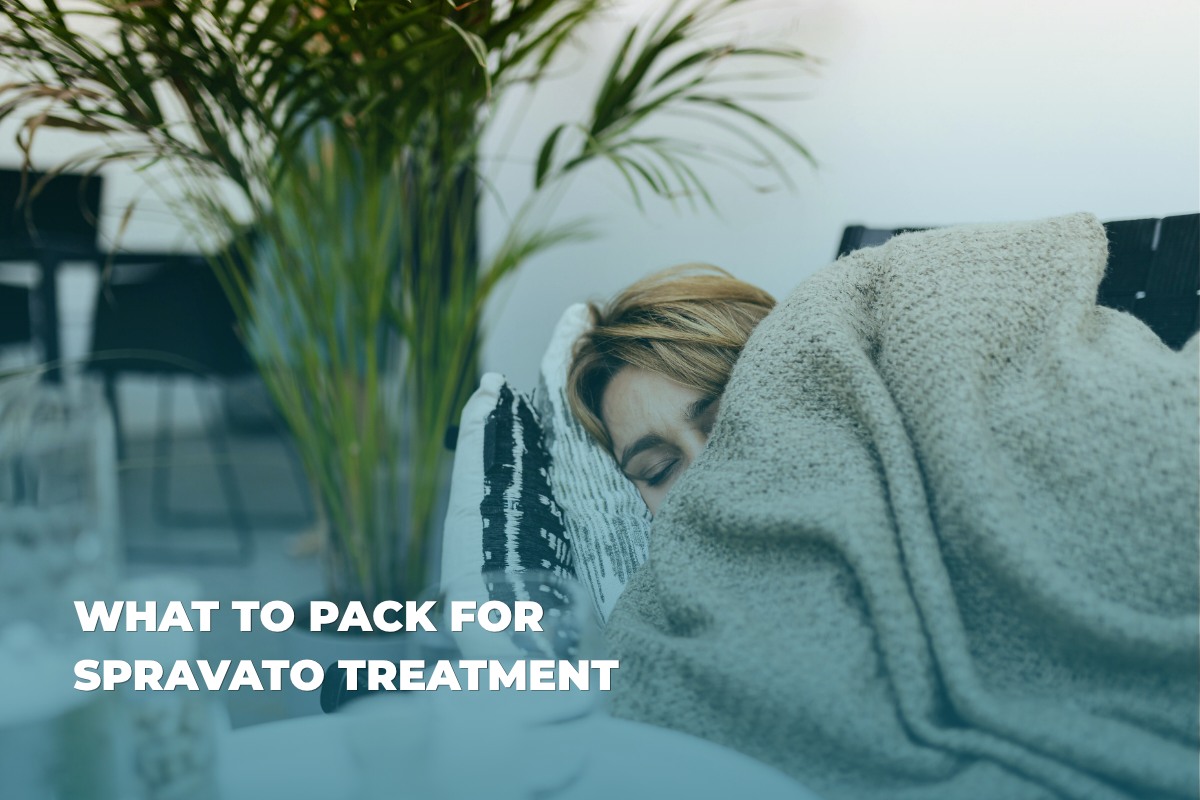
Pack comfort items that help you relax during the two-hour monitoring window: headphones, an eye mask, cozy layers, your ID and insurance card, and a list of your medications. The right bag turns waiting time into rest time.
Want to see what an experienced Spravato bag really looks like? Axis Co-Founder Liesl Perez shows exactly what she packs in her bag in this short video: What I Pack in My Bag for Spravato.
Here is a simple Spravato essentials checklist of what to bring to treatment:
- Headphones and a calming playlist. Music helps many people settle in. Some bring a guided meditation. We published a great article on how to build your ultimate ketamine therapy playlist to help you understand what might be helpful. All Axis clinics have headphones and tablets with calming playlists at the clinic.
- An eye mask. Soft light can feel nicer than bright light during your session. All Axis clinics have warming eye masks in every treatment room.
- Blanket. A blanket (bonus points for weighted ones that help with anxiety) can help you stay calm during treatment.
- Cozy layers. A hoodie or light blanket keeps you comfortable in the chair. Just make sure that it’s easy to put on a blood pressure cuff and get your blood pressure. You will be taking this before treatment, 45 minutes into treatment, and at the end of treatment.
- Your ID, insurance card, and a list of your medications. Easy to forget, but helpful to have. Please be sure to tell your technician anything you may have taken that day.
- A phone charger. A two-hour stay can drain a battery.
- A journal or notes app. Many people like to jot down how they feel.
Bonus Points:
- Essential oil rollers. Calming scents like lavender can elevate the experience and also, start creating associations with relaxation that can be triggered outside of the treatment room.
- Fuzzy socks and foot balm. When so many things seem overwhelming, a little bit of self-care can go a long way.
- Water and a light snack for afterward. Have them ready for when your monitoring period ends.
Our former Spravato patients have also recorded videos with their favorite tips and tricks for Spravato treatment that you can view in our new patient center.
What happens during a Spravato treatment session?
During a Spravato session, your care team checks your vital signs, you spray the medicine into your nose under supervision, and then you relax for about two hours while the team watches over you. Most people find it calmer than they expected.
Here is the basic flow:
- Check-in and vitals. A nurse checks your blood pressure and heart rate.
- Self-administer the spray. You use the nasal spray yourself, with a provider guiding you. Every applicator is provided at 5 minute intervals.
- Monitoring. Typically, you will start to feel the effects about 20 minutes after you inhale the spray and the experience, if you have one, will typically peak between 40-minutes to an hour. During the two hours you are in treatment, the team checks on you both in-person and also, visually through cameras. Your blood pressure is constantly monitored during treatment.
- Going home. Your vitals are checked again before you leave with your ride.
It is normal to feel a little floaty, lightheaded, or “dissociated,” which means feeling detached from your surroundings. These feelings are expected and usually fade within the monitoring period. Your team is there the whole time, so you are never alone.
What does Spravato feel like?
Every session and every person may feel differently about treatment. For some people, the experience starts with an increasing state of relaxation about 10-20 minutes after the last dose. You may feel weightless during treatment, however, you can move your limbs, talk (if you need to), and remain aware of your surroundings. Some people even get up to use the restroom or will watch TV. You will never be paralyzed during treatment, however, you may be in such a deep state of relaxation that you don’t want to move unless absolutely necessary. Some treatments have colorful imagery and other treatments are more calm. Some patients don’t ever experience a psychedelic effect, but that doesn’t mean the treatment isn’t working. No two treatments or people are ever the same.
What are negative experiences people have had with Spravato?
Mental health is a complex and variable thing. We’ve seen some patients work through trauma they have been avoiding for years and start crying during treatment. This isn’t necessarily a bad experience, but a breakthrough because it’s the first time they’ve had empathy for themselves.
Other patients may experience nausea, hypoxia, or high blood pressure with Spravato. We continuously monitor throughout the entire treatment both visually and with hospital-grade blood pressure monitors, and every clinic has a medical supervisor on duty at all times. We also keep a well-stocked supply cabinet of emergency supplies including oxygen tanks, and rescue meds if anything looks amiss. All team members are trained in emergency protocols.
What should you do after a Spravato session?
After Spravato, rest is the goal. Do not drive for the rest of the day, take it easy, and let your body settle. Plan a quiet afternoon rather than a busy schedule.
A few simple aftercare tips:
- Do not drive or operate machinery for 24 hours. Have your ride ready before you arrive. Anyone who drives after treatment will be dismissed from our program.
- Hydrate and eat something light once you are home.
- Give yourself a calm rest of the day. Skip big decisions and heavy tasks. If possible, pre-make meals or do chores before you go to treatment.
- Write down how you feel. Tracking your mood, sleep, and energy helps your provider fine-tune your plan.
Some people notice a lift in mood within hours, while others need several sessions before they feel a clear change. Both are normal.
What are the best tips to get the most out of Spravato?
The biggest Spravato tip is to stick with the full schedule. Consistency, an open mind, and honest check-ins with your provider matter more than any single session. Spravato works best as part of a plan, not a one-time fix.
These Spravato tips come from providers and people who have been through it:
- Finish the full course. Spravato usually starts at twice a week for the first month, then once a week. In one real-world study, 55% of people reached remission, and that climbed to about 67% among those who completed the full protocol (National Library of Medicine).
- Stay open to the experience. Many people describe the floaty feeling as relaxing once they stop fighting it.
- Give yourself permission to do nothing. Many people keep themselves distracted from their feelings by being constantly busy and productive. Spravato demands you do nothing and that’s exactly the point.
- Keep taking your other treatments. Spravato is often paired with other meds (although no longer strictly necessary), so do not stop your other medicine unless your provider says so.
- Talk to your provider. Share what you feel after each session. Small changes can make a big difference.
- Pair it with support. Combining Spravato with therapy and healthy routines helps it work better.
If cost is on your mind, you can estimate your out-of-pocket cost before you start, and your Axis team handles the insurance and prior authorization for you.
Where can you get Spravato near you in Colorado?
Axis Integrated Mental Health offers Spravato in Aurora, Boulder, Denver Tech Center, and Westminster, plus telehealth appointments across Colorado. Spravato is covered by Aetna, Cigna, United Healthcare, Anthem/BCBS and Denver Health Medical plans, and our team handles the paperwork for you.
Whether you are looking for Spravato near you in Boulder, the Denver area, or Westminster, our certified clinics offer Spravato treatment in a calm, supportive space. You can also read real patient stories or explore our other alternative depression treatments like Deep TMS.
You have come this far in your search for relief. The next step is simple.
Book your appointment online or call or text (720) 400-7025 to talk with our friendly intake team today.
Frequently Asked Questions
What should I eat before a Spravato treatment?
Do not eat for at least two hours before your session and avoid liquids for 30 minutes before. This helps prevent nausea. You can have a light meal earlier in the day, so you are not hungry the whole time. If you use a nasal decongestant, take it at least one hour before your appointment.
Next step: See the full prep guide on our Spravato treatment page.
Can I take my regular medications on a Spravato day?
In most cases, yes. People usually keep taking their antidepressants and other daily prescriptions, however, some meds that affect blood pressure might need to be skipped. We will monitor this and communicate with your provider if we notice a pattern with certain medications. Always confirm your full medication list with your provider first, and remember to take nasal sprays an hour before your visit so they do not block the medicine.
Next step: Book a free consultation to review your medications with our team.
How long does a Spravato appointment take?
Plan for about two hours of monitoring after you take the spray, plus a short check-in beforehand. Your first appointment may run a little longer because the team explains each step. You will not be able to drive afterward, so build in time for your ride home.
Next step: Learn what to expect at our Spravato clinics near you.
Can I drive myself home after Spravato?
No. You cannot drive for the rest of the day after Spravato because it can cause drowsiness and a floaty feeling. Arrange a friend, family member, or rideshare before your appointment. Most people feel back to normal by the next day.
Next step: Estimate your visit cost on our Spravato cost page.
How will I feel during a Spravato session?
Most people feel relaxed, and some feel lightheaded or detached from their surroundings, which is called dissociation. These feelings are expected and usually fade within the two-hour monitoring window. Your care team checks on you the whole time, so you stay safe and supported.
Next step: Hear what treatment feels like in our real patient stories.
If you or someone you know is in crisis, call or text 988 to reach the Suicide and Crisis Lifeline, available 24/7.