
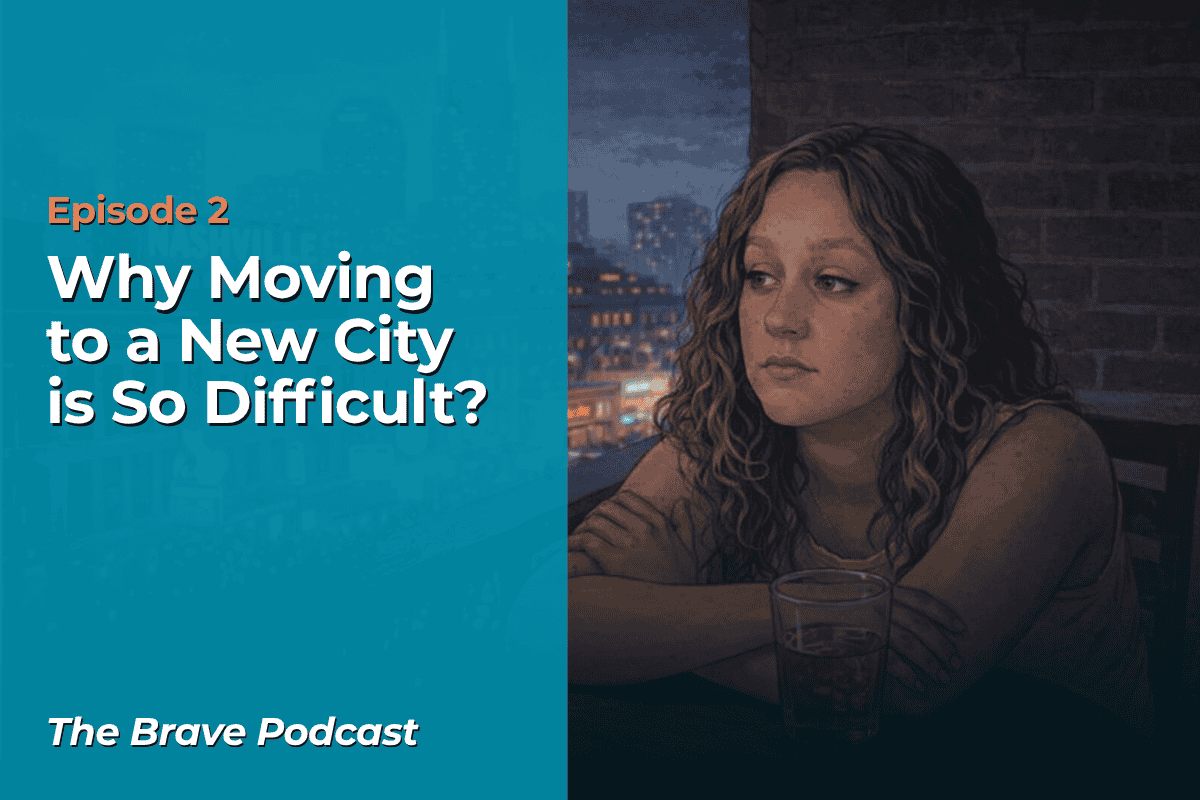
Watch the Episode
Episode Summary
The day Katy Mcallister moved to Nashville, she got the news that a friend had died by suicide. She had packed her car and left Colorado in three days, convinced that a new city would fix what she couldn’t name yet. Instead, she arrived in grief, alone, and more frightened than before.
Nashville was supposed to be the move that made the music career real. She had a manager, she was playing writer’s rounds, and her YouTube videos were hitting a million views. From the outside, things were working. On the inside, she was retreating further into herself every week. The loneliness was deeper than anything she had felt in Colorado. She started using other substances. The drinking increased. And the distance from her family meant she could hide it all.
What made it harder was the success itself. Each milestone felt less like validation and more like a promise she wasn’t sure she could keep. Her friends were moving to LA. The industry was pulling in every direction. And at 21, she was still calling home for advice on cooking and cleaning, still more kid than adult, despite what the marquee said.
Eventually, people in her life started noticing. Not the depression, but the drinking. They described it as a light going out: Katy would be present and fun and then just disappear into herself without warning. She became, in her own words, unreliable. The clearest signal came when she missed a flight to a showcase that represented a full year of paid bookings with her music partner. She didn’t reschedule. She didn’t explain. She just didn’t go.
In Episode 2 of The Brave Podcast, Katy and Darian walk through what it looks like when depression and substance use quietly take over a life that looks successful from the outside, and what it cost her before she was ready to look at it honestly.
Key Ideas
- Katy’s move to Nashville began on the same day she lost a friend to suicide, a detail that shaped everything that followed even if she didn’t name it that way at the time
- The 20s myth: she describes her early 20s as a performance of adulthood, a time when everyone is pretending to have it together while privately figuring out who they are
- Outward success and inward collapse ran in parallel: a million views, a manager, live bookings, and at the same time increasing isolation, substance use, and barely leaving her bed
- Distance from family became cover. In Colorado, people knew her. In Nashville, she could hide behind the version of herself she put on for others.
- Friends started noticing changes in her behavior before she did: the “light going out,” the unpredictability, the gap between what she committed to and what she actually showed up for
- Missing the flight to a year-long showcase booking was the moment the pattern became undeniable, a professional consequence that could not be explained away
- By the end of that year, she had retreated almost entirely. Her world had shrunk to her bedroom and her bed.
Key Lessons
- A new environment doesn’t treat the underlying condition. Katy moved because she thought Colorado and her family were the problem. She found out in Nashville that the problem was internal. Relocation can delay recognition, but it doesn’t replace it.
- External success can mask and delay a mental health crisis. A million views gave Katy a reason to keep performing through the pain. It also added pressure she didn’t have the tools to manage. Success can be a reason to avoid getting help.
- Substance use that starts as coping looks different from the outside than it feels on the inside. Katy didn’t recognize drinking as a problem for a long time. The people around her saw the personality shifts before she did. That gap between self-perception and outside observation is worth paying attention to.
- Isolation is both a symptom and an accelerant. The more Katy withdrew, the harder recovery became. Depression narrowed her world; the narrower the world got, the deeper the depression went. This cycle is common and important to name.
- Missed commitments are often a symptom, not a character flaw. Katy didn’t miss the flight because she was unreliable. She missed it because her functioning had deteriorated to a point where following through wasn’t possible. Behavior that looks like irresponsibility can be depression in disguise.
- The 20s are a high-risk period for undiagnosed mental health struggles. The pressure to look like you have it together, combined with real independence for the first time and limited coping skills, creates conditions where depression and substance use can take hold quietly and quickly.
Episode Q&A
Why did Katy move to Nashville?
She made the decision quickly and impulsively, packing her car and leaving Colorado within three days. She believed the city was the problem. Nashville represented a fresh start and a more serious pursuit of her music career. She found out fairly quickly that the problems she was running from came with her.
What happened the day she arrived?
A friend died by suicide on the day Katy moved to Nashville. She was 21, alone in a new city, grieving, and already overwhelmed. That grief shaped the early period in Nashville even if she didn’t process it that way at the time.
How was her music career doing during this period?
By outward measures, well. She had a music manager, was playing writer’s rounds and live gigs, and had a video hit a million views on YouTube. Her music was on Spotify and Apple Music. Most people watching from the outside had no idea what was happening privately.
Why did the success feel like pressure rather than relief?
Each milestone felt like a promise she wasn’t sure she could keep. The more visible her career became, the more she felt she would eventually have to deliver on it, and she didn’t know if she was capable. Success narrowed her escape routes.
How did people around her describe what they were seeing?
They described a shift in personality when she drank: she would be present and warm and then something would change without warning. They called it the light going out. They told her she had become unreliable, that she said she would do things and then didn’t follow through. That feedback was hard to hear but it was also accurate.
What was the missed flight situation?
She had committed to a showcase that was meant to lead to a full year of paid bookings with her music partner. She missed the flight entirely. Not because of a logistical problem, but because she simply didn’t go. She describes that year as one of the lowest points, when she was barely leaving her bedroom.
Why didn’t she move to LA when her friends did?
She’s grateful she didn’t. She’s said directly that she doesn’t think she would have survived that environment in the state she was in at the time. The combination of LA’s industry pressure, the lifestyle, and her existing struggles would have been too much.
Who is this episode especially relevant for?
People who recently relocated and found themselves feeling worse rather than better. People who are succeeding by external measures but struggling privately. Anyone who has noticed alcohol or substances increasing alongside stress. People who feel isolated despite achievement, or who have tried therapy and are still not finding relief.
Who Is This Episode For
- You recently moved to a new city and feel worse, not better
- You look successful from the outside but are struggling privately
- You’ve noticed alcohol or substance use increasing alongside stress
- You feel isolated despite achievement
- You’ve tried therapy and still feel like something biological is off
Free Resources
1. How to Support a Loved One Struggling with Depression
2. A Woman’s Guide to Depression Recovery with Deep TMS in Denver
3. How to Get Depression Treatment in Denver
Struggling with depression, anxiety, or burnout in Denver, Westminster, Boulder, Aurora, Louisville, or DTC? Reach out to Axis Integrated Mental Health at (720) 400-7025 or visit axismh.com.
Podcast: Play in new window | Download