Watch the Episode
Episode Summary
Katy Mcallister saw her first therapist at 19 in Colorado. The therapist mentioned alcohol. Katy said, “Yeah, maybe,” and moved on. She wasn’t ready. A few panic attacks later, a primary care doctor put her on benzos. She took them daily until another doctor cut her off at 10 and suggested an antidepressant instead. She tried it for two days, decided it was making her someone she didn’t recognize, and flushed the pills. She did not go back.
In Nashville, she tried again. Her therapist there was helpful, and Katy eventually got comfortable enough to admit the alcohol was a real problem. Then the therapist started asking about her family and how she was raised. Katy felt like she was betraying her parents. She walked out mid-session and never returned. That was around 2013. She did not seek help again until 2022.
Nine years. During that stretch, things didn’t steadily worsen. They rolled. She had periods of being present and driven, followed by weeks of withdrawal and numbness. She tried to quit drinking on her own. She couldn’t. It wasn’t until 2020, when she first seriously attempted to stop, that she understood she needed more than willpower.
The pandemic, counterintuitively, helped. The leveling effect of everyone being isolated, vulnerable, and broadcasting from their living rooms made Katy feel less alone than she had in years. She saw a woman on YouTube talking openly about quitting marijuana. Something in that visibility made Katy think: maybe I could do this too. It was the first time she connected the idea of getting better to watching someone else be honest about the same struggle.
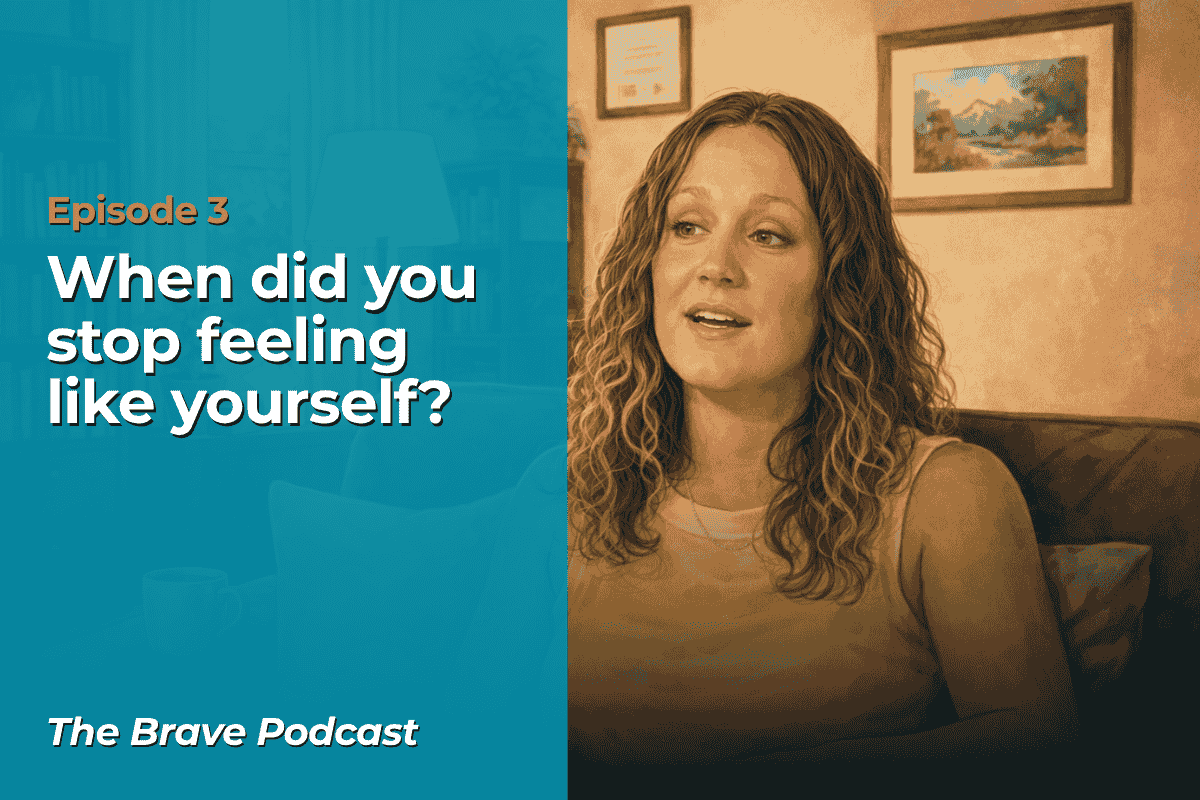
In Episode 3 of The Brave Podcast, Katy and Darian talk through what it looks like to spend nearly a decade knowing you need help, reaching for it partially, and then retreating, and what finally made the difference.
Key Ideas
- At 19, a therapist named the alcohol issue directly. Katy heard it, acknowledged it, and did nothing. Not because she disagreed, but because she wasn’t ready to act on it.
- Two rounds of panic attacks led to benzos, then a hard cutoff, then an antidepressant she flushed after two days because it made her feel “not herself.” The irony of rejecting medication to avoid altered states while drinking heavily was not lost on her in retrospect.
- A psychiatrist in Nashville gave her the most direct assessment yet: you have an alcohol problem. She left and never went back because he wasn’t telling her what she wanted to hear.
- Her Nashville therapist actually got her to acknowledge the alcohol. That was real progress. Then the therapist brought up her family and Katy walked out, feeling protective of her parents and unwilling to let anyone assign blame to them.
- From roughly 2013 to 2022, her mental health was a rolling pattern rather than a straight decline. She had good stretches. She had bad ones. She tried to manage on her own.
- The pandemic’s unexpected gift was a leveling effect. Seeing everyone, from John Legend to anonymous YouTube creators, be vulnerable from their living rooms made Katy feel less like a broken outlier.
- Watching a stranger on YouTube talk openly about quitting marijuana was the first moment Katy connected visibility and vulnerability to the idea that recovery was actually possible for her.
Key Lessons
- Hearing the truth and being ready to act on it are two different things. Katy was told, correctly, about her alcohol problem at 19. She wasn’t in a place to do anything with that information. This is common. Readiness has its own timeline, and shame about not being ready sooner rarely helps.
- Many people stop medication because it feels wrong before it feels right. Antidepressants often cause discomfort in the first days, which gets misread as permanent. Katy flushed hers after two days. This is one of the most common reasons medication management fails, and why provider support during the adjustment period matters.
- Most people don’t know the difference between therapy and psychiatry. Katy didn’t understand that psychiatrists manage medication while therapists don’t prescribe. Darian notes this is one of the most common sources of confusion for people calling in. Knowing the difference changes how people navigate the system.
- Protective responses to family-focused therapy are normal and worth naming. Katy’s defensiveness about her parents wasn’t avoidance of the truth. It was loyalty. Understanding why that reaction happens, rather than pushing past it too fast, is part of effective treatment.
- Seeing someone else be vulnerable about the same struggle is genuinely therapeutic. Katy didn’t start her recovery journey with a clinical intervention. She started it watching a stranger on YouTube. Peer visibility, especially online, reaches people that formal systems miss entirely.
- Depression doesn’t always look like a steady decline. Katy’s nine years without treatment weren’t nine years of constant rock bottom. There were good periods. That up-and-down pattern can make it easier to talk yourself out of needing help, especially when things temporarily improve.
Episode Q&A
When did Katy first seek mental health support?
At 19, in Colorado, she briefly saw a therapist who raised the possibility of an alcohol problem. Katy acknowledged it loosely and didn’t follow through. It was her first real contact with the mental health system and she wasn’t ready to engage with what it was telling her.
How did panic attacks factor into her treatment history?
She ended up in the hospital a couple of times with panic attacks and had no framework for understanding what was happening. There was no language for anxiety in her household growing up. She thought she was dying. Her doctor prescribed benzos, which she took daily until another doctor cut her off at 10 pills and steered her toward an antidepressant instead.
Why did she stop the antidepressant after two days?
It made her feel unlike herself and she didn’t want to feel numbed out. She flushed the prescription. She reflects on the irony of that decision given how much she was drinking at the time, but it captures how resistant she was to any intervention that felt like it was altering who she was.
What happened with the psychiatrist in Nashville?
He told her directly that she had an alcohol problem and needed to address it. She left and never went back. She wasn’t ready to hear that. She wanted medication for the depression and anxiety. He gave her an honest clinical assessment she wasn’t prepared to accept.
What eventually worked in her Nashville therapy?
Her therapist built enough trust that Katy was finally able to admit the alcohol was a real problem. That was meaningful progress. The relationship ended when the therapist began discussing her family and upbringing. Katy felt protective of her parents and didn’t want them pathologized. She walked out and didn’t go back.
How long did she go without seeking help after Nashville?
From roughly 2013 to 2022, about nine years. During that time, the pattern was a rolling cycle rather than a constant low. She had periods of momentum and periods of withdrawal. She tried to manage the drinking on her own and didn’t seriously attempt to stop until 2020.
How did the pandemic affect her recovery?
Unexpectedly, it helped. The shared vulnerability of everyone being at home, isolated, and open about it made her feel less like an outlier. She noticed people, including public figures, being honest about their struggles online. That environment made her more willing to look at her own. She also discovered a YouTube creator talking openly about quitting marijuana, which was the first time she connected seeing someone else’s recovery to believing her own was possible.
What would Katy tell her 19-year-old self?
That the world is bigger than she thinks it is. That it’s not all about her, and that what other people think matters less than it feels like it does at that age. She also wishes she had given therapy more of a chance and had been more open with the people she was working with in music about what was really going on, rather than letting them see only the party and never understand what was underneath it.
Free Resources
1. What does Spravato cost with insurance in Denver?
2. How to Support a Loved One Struggling with Depression
3. A Woman’s Guide to Depression Recovery with Deep TMS in Denver
4. How to Get Depression Treatment in Denver
Struggling with depression, anxiety, or burnout in Denver, Westminster, Boulder, Aurora, Louisville, or DTC? Reach out to Axis Integrated Mental Health at (720) 400-7025 or visit axismh.com.
Podcast: Play in new window | Download