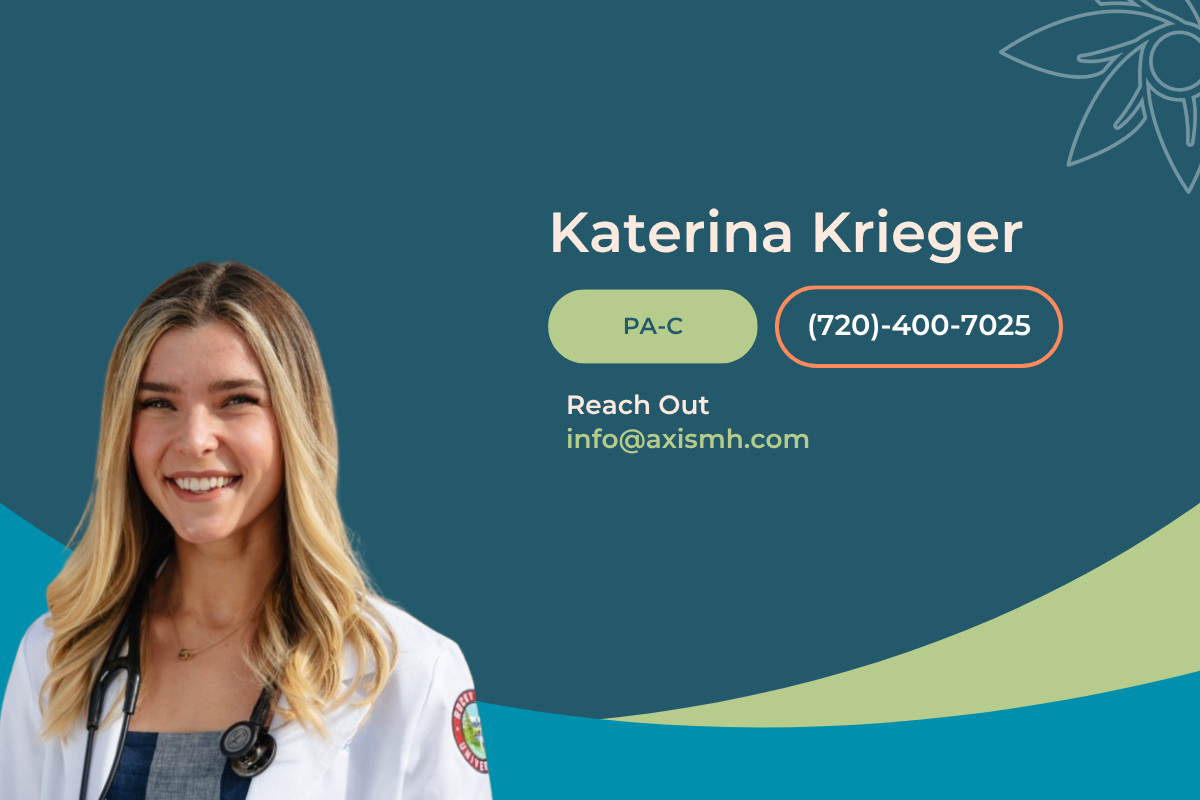
Deep TMS and ketamine therapy are showing promise as treatments for eating disorders, particularly when depression, anxiety, or treatment resistance complicate recovery. These advanced psychiatric interventions target brain circuits involved in mood regulation, impulse control, and rigid thinking patterns, addressing the neurological roots of disordered eating rather than symptoms alone. At Axis Integrated Mental Health in Denver, Katerina Krieger, PA-C, uses these modalities alongside traditional medication management and therapy coordination to treat patients with co-occurring eating disorders and mood disorders.
Why Traditional Treatments Fall Short for Many Eating Disorder Patients
Eating disorders carry the highest mortality rate of any mental health condition. Standard first-line treatments, including cognitive behavioral therapy, nutritional rehabilitation, and SSRI medications, help many patients. But a significant percentage of people with anorexia nervosa, bulimia nervosa, binge eating disorder, and ARFID do not respond adequately to these approaches.
The challenge is compounded by the fact that eating disorders almost never appear alone. Depression, anxiety, PTSD, OCD, and suicidal ideation frequently co-occur, creating layered conditions that resist single-modality treatment. A patient restricting food intake due to anorexia, for example, may simultaneously experience treatment-resistant depression that blunts their motivation to engage in therapy. A patient with bulimia may be driven by trauma-related anxiety that SSRIs only partially address.
“What I saw working at the Eating Recovery Center is that many patients had already tried multiple medications and therapy approaches before reaching us,” says Katerina Krieger, PA-C. “The patients who struggle the most are often the ones where eating disorder symptoms and mood disorder symptoms are feeding each other in a cycle that traditional treatments alone cannot break.”
This treatment gap is precisely where advanced interventions like TMS and ketamine therapy enter the picture.
How Deep TMS Targets the Brain Circuits Behind Disordered Eating
Transcranial magnetic stimulation uses focused magnetic pulses to stimulate specific regions of the brain. The primary target for eating disorder research has been the dorsolateral prefrontal cortex (DLPFC), a region involved in decision-making, impulse control, and cognitive flexibility. The dorsomedial prefrontal cortex (DMPFC), which regulates emotional responses, has also been studied.
In people with eating disorders, these brain regions often show abnormal patterns of activity. Anorexia is associated with heightened rigidity in the prefrontal cortex, making it difficult for patients to shift away from restrictive eating patterns even when they consciously want to. Bulimia and binge eating disorder involve dysregulated reward circuitry, where the brain’s response to food becomes exaggerated in some pathways and suppressed in others.
A 2025 systematic review and meta-analysis published in the Eating and Weight Disorders found that TMS targeting the DLPFC produced improvements in eating disorder symptoms, particularly in reducing food cravings, binge-purge frequency, and rigid thought patterns in patients with anorexia nervosa. A separate 2024 meta-review of neuromodulation techniques found that rTMS was effective at managing binge eating and craving levels across multiple eating disorder subtypes.
Deep TMS, the form available at Axis Integrated Mental Health, uses an H-coil design that reaches broader and deeper brain structures than standard TMS, and results in higher efficacy and remission rates for depression. This deeper stimulation may offer advantages for conditions like eating disorders, where the neural circuits involved extend beyond the cortical surface.
What Competitors Are Not Telling You: The Comorbidity Advantage
Most content about TMS for eating disorders focuses narrowly on one condition at a time. But Katerina’s clinical experience points to a more practical reality: the patients who benefit most from TMS for eating disorder symptoms are often the same patients receiving TMS for co-occurring depression, anxiety, or OCD. Moreover, they may be using outdated technology rather than the most advanced TMS treatments available, despite no difference in insurance coverage or cost.
Deep TMS is already FDA-cleared for major depressive disorder, OCD, and smoking cessation. When a patient with anorexia and treatment-resistant depression receives Deep TMS, both conditions may improve through the same treatment course because the same prefrontal circuits are involved in both. This dual benefit is something that siloed treatment models, where eating disorder care and psychiatric care happen in separate clinics, often fail to capture.
At Axis, Katerina can coordinate with your existing eating disorder-focused care team and advanced neuromodulation, eliminating the fragmentation that slows recovery.
How Ketamine Therapy Addresses the Mood and Thought Patterns Driving Eating Disorders
Ketamine works through a fundamentally different mechanism than traditional antidepressants. Rather than modulating serotonin levels over weeks, ketamine acts on the glutamate system and NMDA receptors to promote rapid synaptogenesis, essentially helping the brain form new neural connections. This process can produce measurable improvements in depression and suicidal ideation within hours rather than weeks.
For eating disorder patients, ketamine’s mechanism offers several potential advantages. First, it can rapidly reduce the depression and suicidal thinking that keep patients from engaging in therapy and nutritional rehabilitation. Second, its effect on cognitive flexibility may help break the rigid, obsessive thought patterns that characterize anorexia and drive binge-purge cycles in bulimia. Third, ketamine has been shown to reduce anxiety and self-critical rumination, both of which fuel eating disorder behaviors.
A 2025 comparison study published in the Journal of Eating Disorders found that ketamine may be a viable treatment option for individuals with eating disorders and comorbid depression. Earlier case studies documented improvements in mood, cognitive flexibility, and eating disorder symptoms in patients with severe, treatment-resistant anorexia who had not responded to multiple prior interventions.
“I was surprised to learn and witness the effectiveness of ketamine therapy for patients who struggle with suicidal thoughts and treatment-resistant depression,” Katerina says. “It is very cool that psychiatry as a field is utilizing treatments outside of traditional medications as a way of expanding our toolkits.”
Axis Integrated Mental Health offers both ketamine infusion therapy and Spravato (esketamine), the FDA-approved nasal spray for treatment-resistant depression and suicidal ideation.
Who Benefits Most from These Approaches
TMS and ketamine therapy for eating disorders are not first-line treatments. They are most appropriate for patients who have tried standard interventions, including therapy, medication, and possibly residential or inpatient treatment, without achieving adequate recovery.
Candidates who may benefit most include patients with eating disorders and co-occurring treatment-resistant depression, individuals whose rigid cognitive patterns have not responded to CBT or DBT, patients with active suicidal ideation alongside their eating disorder, people who have completed residential eating disorder treatment but continue to struggle with mood symptoms that drive relapse, and adults with ARFID or OSFED presentations that do not respond to standard pharmacological approaches.
Katerina evaluates each patient individually, assessing their complete psychiatric history, previous treatment responses, current symptom severity, and personal goals before recommending advanced interventions.
Katerina Krieger’s Path from Neuroscience to Eating Disorder Psychiatry
Katerina’s journey into psychiatric care was not a straight line. She began in a neuroscience research lab at the University of Minnesota, conducting behavioral studies and neurosurgery on animal models of epilepsy. That foundational understanding of brain function still informs her clinical reasoning today.
After earning her PA degree from Rocky Vista University, she entered burn surgery at Swedish Medical Center. Working in the Burn ICU, she managed patients with complex medical comorbidities and led goals-of-care discussions with families facing life-altering injuries. “I was inspired by their vulnerability and tenacity as they navigated treatment,” she says.
That experience with medical trauma naturally led her to psychiatry, where she joined the Eating Recovery Center and Pathlight Mood and Anxiety Center. There, she treated eating disorders across inpatient, residential, and partial hospitalization levels of care while also managing a full spectrum of psychiatric conditions including depression, anxiety, PTSD, substance use, and psychotic disorders. She prescribed TMS and ketamine therapies, performed rapid ketamine titrations, and coordinated multidisciplinary care with therapists, dietitians, and medical teams.
Now at Axis Integrated Mental Health, Katerina brings that same comprehensive, team-based approach to outpatient care.
What to Expect When You See Katerina at Axis Integrated Mental Health
Your first appointment with Katerina is a comprehensive psychiatric evaluation. She will review your complete history, discuss previous treatments that worked and those that did not, and explore what you want your recovery to look like. She approaches this conversation collaboratively. As she puts it: “My job is not to tell people to take a certain medication. I will work collaboratively with my patients with a holistic approach to decide what treatments may be best recommended in addition to therapy, coping skills, and social supports.”
If advanced treatments like Deep TMS, ketamine, or Spravato are appropriate, Katerina will walk through the process, expected timelines, and what the research shows for your specific situation. She coordinates closely with your therapist, dietitian, and any other providers involved in your care.
Axis Integrated Mental Health has locations across the Front Range including: Aurora, Westminster, Boulder, and the Denver Tech Center. Telehealth is available statewide. Most major insurance plans are accepted.
Schedule Your Consultation
If you or someone you care about is navigating an eating disorder alongside depression, anxiety, PTSD, or suicidal thoughts, Katerina Krieger, PA-C, can help you evaluate whether advanced treatments may be right for your recovery. Call or text (720) 400.7025 or visit axismh.com to schedule an appointment.
FAQs
Is TMS FDA-approved for eating disorders, or is it considered off-label?
TMS is not FDA-approved for eating disorders. When used to treat anorexia, bulimia, binge eating disorder, or ARFID, TMS is considered an off-label application. When used to treat a comorbid condition like depression, it is considered “on-label”.
The FDA has cleared TMS devices for major depressive disorder (the first clearance came in 2008), obsessive-compulsive disorder (2018), smoking cessation, migraines, and anxious depression. In 2024 and 2025, the FDA also expanded TMS clearance to adolescents ages 15 to 21 for major depressive disorder. Eating disorders are not currently among these approved indications.
That said, off-label does not mean unsupported. Multiple peer-reviewed studies and clinical trials have investigated TMS for eating disorders, with a 2025 systematic review and meta-analysis finding improvements in eating disorder symptoms when TMS targeted the dorsolateral prefrontal cortex. A 2024 meta-review of neuromodulation techniques similarly found that repetitive TMS showed promising results in managing binge eating and food cravings across anorexia, bulimia, and binge eating disorder.
Can I receive ketamine therapy for my eating disorder if I am also seeing a therapist at another practice?
Yes. You do not need to receive all of your care at one practice to be eligible for ketamine therapy at Axis Integrated Mental Health. Many patients work with an outside therapist, dietitian, or primary care provider while receiving psychiatric medication management and advanced treatments like ketamine or Spravato at Axis.
In fact, continuing therapy with a provider you trust is often beneficial. Ketamine therapy can produce rapid shifts in mood, cognitive flexibility, and the intensity of obsessive thought patterns around food and body image. Having a therapist who knows your history helps you process and build on those changes between sessions.
What Axis does require is coordination. Katerina Krieger, PA-C, will want to know who else is involved in your care so she can ensure your treatment plan is aligned. This might include communicating with your therapist about treatment goals, sharing updates on medication changes, or coordinating with a dietitian if you are in active nutritional rehabilitation. This collaborative approach reduces the risk of conflicting treatment strategies and keeps everyone working toward the same recovery goals.
If you do not currently have a therapist, Axis can also connect you with one through the practice’s partner network of referral providers across the Denver metro area.
How long does a typical course of Deep TMS take, and how soon might I notice improvements in my eating disorder symptoms?
A standard course of Deep TMS treatment consists of daily sessions, five days per week, over approximately four to six weeks. Each individual session lasts about 20 minutes. Some patients may also receive maintenance sessions after the initial treatment course, typically one to two times per week for an additional 2 months, to sustain improvements.
In September 2025, the FDA also cleared an accelerated Deep TMS protocol that compresses the initial treatment phase from four weeks down to six days. Availability of accelerated protocols depends on the specific clinical situation and provider recommendation and is not covered by insurance.
The timeline for noticing improvements varies. For patients whose eating disorder symptoms are closely tied to co-occurring depression or anxiety, mood improvements from TMS sometimes appear within the first two weeks of treatment. Changes in rigid thinking patterns, food-related obsessions, and binge-purge urges may take longer to become apparent, and some patients report that they didn’t realize the full benefit until months after the completion of treatment.
Research on TMS for eating disorders specifically is still developing, and response timelines are less standardized than they are for depression. Katerina Krieger, PA-C, sets realistic expectations during the evaluation process and tracks symptoms throughout treatment to assess whether TMS is producing meaningful change for each individual patient.
Does insurance cover TMS or ketamine therapy when the primary diagnosis is an eating disorder?
Insurance coverage for TMS and ketamine therapy depends on the diagnosis used for billing, not necessarily the condition you are seeking help for. Most insurance plans cover TMS when the primary diagnosis is treatment-resistant major depressive disorder. Some plans also cover TMS for OCD. Coverage for TMS when the primary billing diagnosis is an eating disorder alone is rare, because TMS is not FDA-approved for eating disorders.
However, many patients with eating disorders also meet diagnostic criteria for major depressive disorder, treatment-resistant depression, or OCD. When a co-occurring condition that carries FDA clearance is the primary diagnosis, TMS may be covered by insurance even though eating disorder symptoms are also being addressed during treatment. This is a clinical and billing question that Katerina Krieger, PA-C, and the Axis team navigate with patients on a case-by-case basis.
For ketamine infusion therapy, insurance coverage is generally limited because IV ketamine is used off-label for depression. Spravato (esketamine), on the other hand, is FDA-approved for treatment-resistant depression and major depressive disorder with suicidal ideation, and is covered by most commercial insurance plans. For patients with eating disorders and co-occurring treatment-resistant depression, Spravato often represents the most accessible and insurance-friendly advanced treatment option.
The Axis Integrated Mental Health team can verify your specific insurance benefits and walk you through coverage options, out-of-pocket costs, and any prior authorization requirements before treatment begins. Call (720) 400-7025 to start that conversation.
What is the difference between ketamine infusion therapy and Spravato, and which one is better for someone with an eating disorder and depression?
Ketamine infusion therapy and Spravato (esketamine) both target the brain’s glutamate system and NMDA receptors to promote the formation of new neural connections, but they differ in formulation, administration, FDA status, and insurance coverage.
Ketamine infusion therapy delivers racemic ketamine (containing both the S and R molecular forms) intravenously over 40 to 60 minutes in a clinical setting. IV ketamine is used off-label for depression and is rarely covered by insurance. Out-of-pocket costs typically range from $400 to $800 per session.
Spravato is a nasal spray containing esketamine (only the S form of the molecule). It is FDA-approved for treatment-resistant depression and for major depressive disorder with acute suicidal ideation. Because it carries FDA approval, Spravato is covered by most commercial insurance plans. It must be administered at a certified REMS facility under medical supervision, with a two-hour observation period after each dose.
For patients with an eating disorder and co-occurring depression, the choice between the two depends on several factors. Spravato is generally the more accessible option because of its insurance coverage and FDA-approved status. It also provides a standardized dosing protocol and the safety infrastructure of the REMS program. IV ketamine may offer more flexibility in dosing and may be considered when a patient has not responded to Spravato or when the clinical team determines that the racemic formulation may offer advantages for a particular patient’s symptoms.
Neither treatment is FDA-approved specifically for eating disorders. Both are used to address the depression, suicidal ideation, and rigid cognitive patterns that frequently co-occur with and complicate eating disorder recovery. Katerina Krieger, PA-C, has prescribed and managed both ketamine and TMS therapies in clinical settings and can help you evaluate which approach fits your situation, treatment history, and insurance coverage.
To discuss your options, call Axis Integrated Mental Health at 720.400.7025 or visit axismh.com to request a consultation.