You have tried everything. The fourth antidepressant made you gain 30 pounds. The fifth killed your sex drive. The sixth did nothing at all. You have sat in therapy, exercised until your muscles ached, meditated, changed your diet, and fixed your sleep, and still, depression clings to you like wet cement.
If this is your story, you are likely researching Transcranial Magnetic Stimulation (TMS). You have heard it is the “next step” when medications fail. You have seen the brochures promising a life without side effects.
But here is the critical detail most clinics in Boulder and Denver won’t tell you: Not all TMS is created equal. The difference between technologies is the difference between an 82% efficacy rate and 65% remission rate vs. a technology could reduce your likelihood for remission by nearly half – and for the same amount of time and cost.
If you are researching treatment options, you will encounter two main types of therapy: Standard rTMS (repetitive Transcranial Magnetic Stimulation) and Deep TMS (dTMS). While they share an acronym, they use fundamentally different technologies to target your brain. Understanding this difference is the key to finally getting the relief you deserve.
At Axis Integrated Mental Health, we believe you deserve to know exactly what is happening inside your brain before you commit to a 6-12 week treatment course.
The Reality of Treatment-Resistant Depression
Let’s be honest about what treatment-resistant depression means. According to the landmark STAR*D study (Sequenced Treatment Alternatives to Relieve Depression), widely considered the most comprehensive study on antidepressant effectiveness, the chance of achieving remission drops significantly with each new medication you try. By the time you are on your third or fourth medication attempt, remission rates plummet to less than 15%.
The medical system often treats this as a failure of effort on your part. Doctors suggest you aren’t trying hard enough, not taking the pills correctly, or that it’s “all in your head”, as if depression lives anywhere else.
The truth is simpler: Depression is a biological brain disorder. For millions of people, changing brain chemistry with pills isn’t enough because the issue isn’t just chemical, it’s electrical. You need to change brain activity directly.
The Core Difference: Laser Pointer vs. Floodlight
To understand why Deep TMS is often the superior choice for resistant cases, you have to understand the anatomy of the brain.
Both Standard rTMS and Deep TMS use magnetic pulses to stimulate the left dorsolateral prefrontal cortex (DLPFC). This is the “CEO” of the brain, the region responsible for executive function, mood regulation, and motivation. In people with depression, brain scans consistently show this area is underactive (hypoactive).
However, how the two technologies reach that target is vastly different.
1. Standard rTMS (The Figure-8 Coil)
Standard rTMS uses a generic “Figure-8” coil. Think of this like a laser pointer.
- The Mechanism: It delivers a focused magnetic beam to a very specific, shallow spot on the brain’s surface (approximately 1.5 cm deep).
- The Risk: Because the beam is so narrow, accuracy is everything. If the coil shifts slightly, or if your specific brain anatomy varies by just a few millimeters, the treatment may miss the target entirely. This is a known challenge in the field; studies published in journals like Brain Stimulation have noted that standard targeting methods can sometimes miss the DLPFC in a significant percentage of patients due to anatomical variability.
- The Experience: The coil is often held in place by a mechanical arm or a technician. You must remain perfectly still (often for 37 minutes) to ensure the “laser” hits the right spot.
2. Deep TMS (The H-Coil)
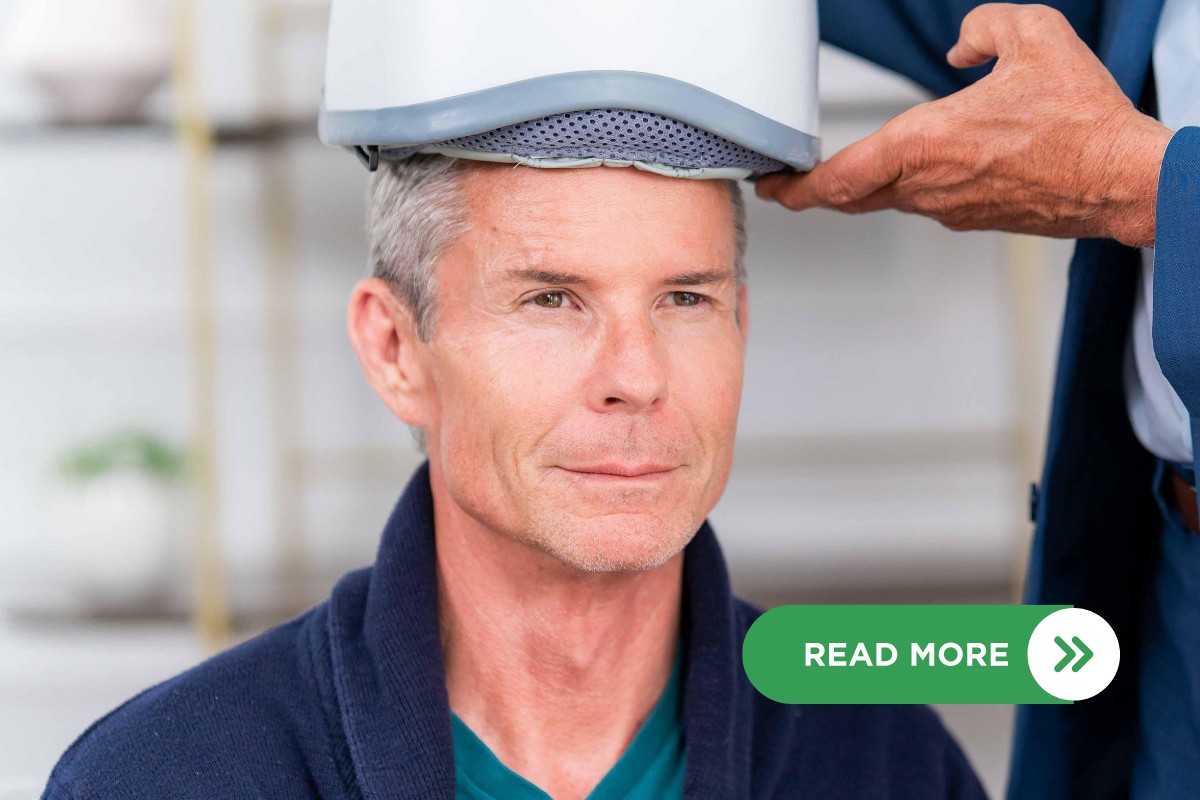
Deep TMS, which is the specific technology we utilize at our Boulder and Westminster clinics, uses a patented “H-Coil” housed inside a cushioned helmet. Think of this like a powerful floodlight.
- The Mechanism: It creates a complex, multi-dimensional magnetic field that penetrates deeper and wider than standard coils.
- The Depth Advantage: Deep TMS penetrates stimulates a volume of approximately 18 cm² compared to just 3 cm² for standard rTMS. This broader field accounts for the natural variations in human skull shape and brain structure. It is significantly harder to “miss” the target with a floodlight than with a laser pointer.
Do you want to know how much TMS will cost with your insurance coverage?
Book a free financial consultation with our expert Rachel!
At your appointment, we’ll tell you:
- What your insurance plan requires to cover treatment
- Your estimated out-of-pocket cost
- If you qualify for financial assistance programs
We believe that costs should not be the only reason you don’t get the mental health care. Ask Rachel about payment plans, alternative payments, and more on your call.
Get Free Treatment Cost Consultation
Book Now Before Slots Fill-out.
Deep TMS Cost Calculator
Estimate your out-of-pocket cost in under 60 seconds
This is a general estimate only. Your actual cost may differ. Axis verifies your exact benefits before treatment begins. No insurance data is stored.
Important: This is an estimate only, not a guarantee or full benefits investigation. Actual costs depend on your specific plan and claim processing. You are not required or encouraged to book services with Axis based upon this calculator. The calculator is provided as a certain mental and behavioral health concerns.
Why the Data Favors Deep TMS
When you are fighting for your life against depression, you don’t want to rely on a technology that requires perfect conditions to work. You want the technology that is robust, forgiving, and comprehensive.
Clinical data supports the advantages of the H-Coil design. In head-to-head comparisons and independent studies, Deep TMS has demonstrated high efficacy rates.
- Response Rates: While standard rTMS generally shows response rates between 50-60%, studies utilizing the BrainsWay protocol have reported high response rates with durable results.
- Accelerated Protocols: Emerging research and clinical reporting have highlighted accelerated treatment regimens and strong outcomes using Deep TMS technology in appropriate patients. (For example: BrainsWay clinical data coverage.)
Local Resources & Next Steps
We have strategically placed our clinics to serve the entire Denver Metro area:
- Denver Tech Center: Conveniently located to reduce time out of the office.
- Aurora: Integrated care with insurance specialists on-site.
- Boulder: Featuring the newest Deep TMS technology and evening appointments.
- Westminster: Bilingual providers, convenient scheduling, and transportation assistance programs.
Make the Decision
Deep TMS is neither a miracle nor a scam. It is a legitimate, FDA-cleared medical treatment that uses advanced physics to reset brain activity.
If you are living with depression that nothing has touched, you owe it to yourself to try the “floodlight” instead of the “laser.”
Contact Axis Integrated Mental Health today at 720-400-7025. Ask for a consultation specifically about Deep TMS. Be honest about what you’ve tried. Let’s find out if this is the key that finally opens the door to your life.