If two or more antidepressants have not helped enough, you are not out of options. It usually means your brain needs a different approach.
Two evidence-based choices many women consider are Deep Transcranial Magnetic Stimulation, called Deep TMS, and ketamine-based treatments.
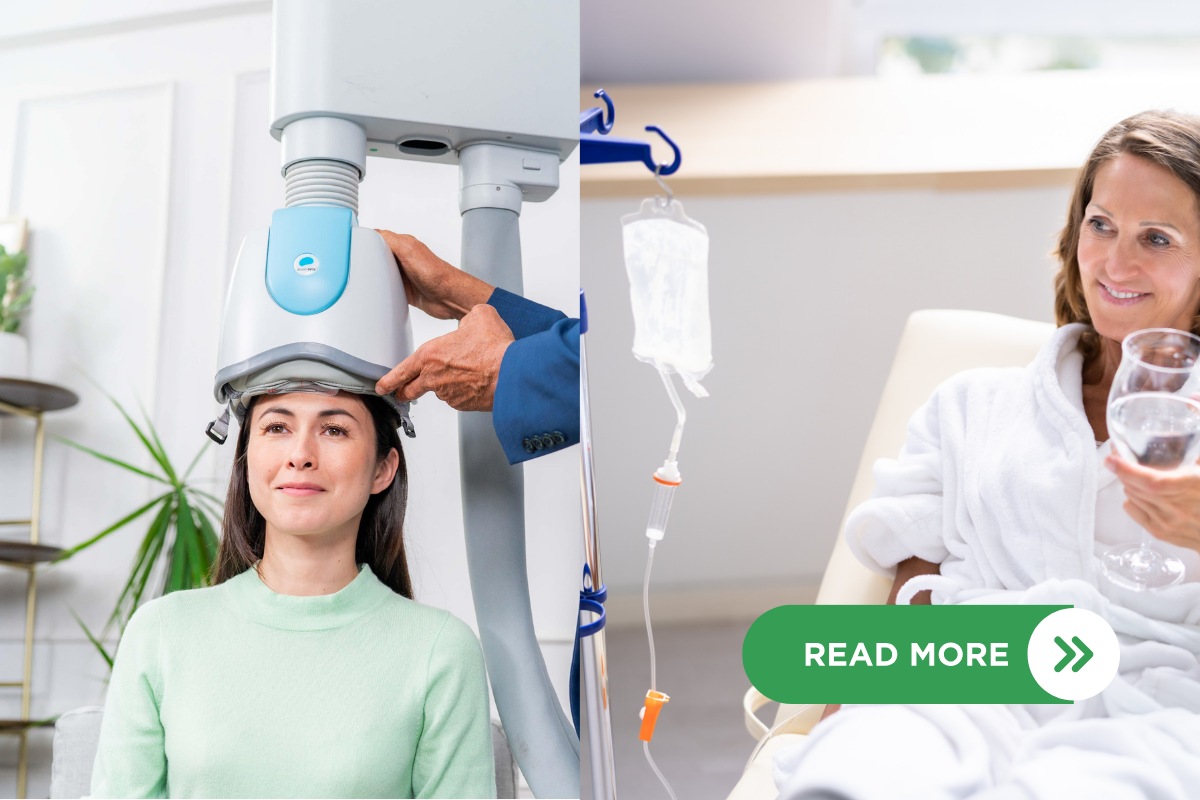
They work in very different ways. Deep TMS is a non-medication therapy that uses targeted magnetic pulses to help mood circuits fire more normally.
Ketamine is an anesthetic that acts quickly on glutamate signaling. IV ketamine is an infusion used off-label for depression and is typically cash pay.
Spravato is esketamine in a nasal spray, it is FDA-approved for treatment-resistant depression and is delivered only in certified clinics with on-site monitoring.
These are not the same thing, and patients deserve a clear explanation before choosing.
At Axis Integrated Mental Health in the Denver Tech Center, Aurora, Boulder, and Westminster, we help women compare these options, review their history, and build a plan that balances speed, safety, and staying power.
Why women need a different lens on depression
Gender bias in mental health care shapes how symptoms are noticed, labeled, and treated.
Did you know women are more likely to be offered antidepressants first, even when therapy or advanced treatments would be appropriate.
Let’s not forget, men are more likely to be under-diagnosed until a crisis event forces attention.
Women also carry more unpaid caregiving and household management, which adds chronic stress that is easy to minimize and hard to measure.
Hormonal phases influence presentation. Premenstrual changes can amplify mood swings and sleep disruption.
Postpartum shifts can increase risk for major depression and anxiety.
Perimenopause can heighten irritability, brain fog, and loss of motivation that gets brushed off as “just hormones.”
A gender-aware plan starts with these realities. It does not blame hormones, it uses them as clinical context so treatments like Deep TMS, IV ketamine, or Spravato are chosen with the full picture in view.
How depression often presents by gender, at a glance
| Factor | Women | Men |
|---|---|---|
| Most common first pathway into care | Primary care visit with fatigue, sleep changes, worry, irritability | Workplace or family crisis, substance use, anger, withdrawal |
| How symptoms get described | “Overwhelmed,” “tired,” “not myself,” “anxious,” “stressed” | “Angry,” “numb,” “fine,” “drinking more,” “burned out,” “checked out” |
| How depression gets missed | Misread as “life stress,” PMS, or “just busy” | Misread as personality, work pressure, or substance issue |
| Higher risk windows | Postpartum, perimenopause, PMDD, hormonal shifts, caregiver overload | Job loss, retirement, relationship breakdown, substance escalation |
Deep TMS vs ketamine, what is the clinical difference?
Deep TMS and ketamine-based treatments both aim to change brain activity, but they do it through different pathways and timelines.
Deep TMS uses magnetic pulses to stimulate targeted brain regions involved in mood regulation. It is non-invasive, does not require anesthesia, and does not create a dissociative “high.”
Ketamine-based treatments act on glutamate signaling and can create rapid symptom relief for some patients, often within hours. That fast onset is one reason ketamine is discussed for severe depression and suicidal thinking. But the experience can include dissociation, sedation, and a required observation period.
Spravato is esketamine, a ketamine derivative. It is FDA-approved for treatment-resistant depression, but it must be administered in a certified clinic under a REMS program with monitoring.
IV ketamine is typically off-label for depression, and many infusion clinics operate on a cash-pay model.
At a glance, how the options differ
| Feature | Deep TMS | IV Ketamine | Spravato (esketamine) |
|---|---|---|---|
| Type | Non-medication neuromodulation | Medication infusion, off-label for depression | FDA-approved nasal spray for TRD |
| Time commitment | Daily sessions (weekday) for several weeks | Infusions over several weeks, then maintenance as needed | Twice weekly initially, then weekly or every other week |
| Observation | No post-session observation required | Short post-infusion rest | Two hours in clinic per REMS program |
| Insurance coverage | Often covered with prior authorization | Typically cash pay | Covered by many commercial plans with prior authorization |
| Common experiences | Scalp tapping, mild headache possible | Dissociation, sedation, nausea possible | Dissociation, sedation, nausea possible |
Success Rates & Complete Relief Comparison between Deep TMS, Spravato, and IV Ketamine
| Deep TMS | Spravato | IV Ketamine | Antidepressants | |
|---|---|---|---|---|
| Efficacy | 82% | 79% | 65% | 40% |
| Remission | 65% | 50% | 30% | 15% |
| Complete relief | 50% | 30% | 20% | 5% |
Do you want to know how much TMS will cost with your insurance coverage?
Book a free financial consultation with our expert Rachel!
At your appointment, we’ll tell you:
- What your insurance plan requires to cover treatment
- Your estimated out-of-pocket cost
- If you qualify for financial assistance programs
We believe that costs should not be the only reason you don’t get the mental health care. Ask Rachel about payment plans, alternative payments, and more on your call.
Get Free Treatment Cost Consultation
Book Now Before Slots Fill-out.
What matters most for women choosing between Deep TMS and ketamine
When we help women compare Deep TMS and ketamine-based treatments, the conversation usually comes down to five questions:
- How quickly do you need relief?
- How stable do you want the improvement to be over time?
- How do you tolerate medication side effects or altered states?
- What is realistic for your schedule and responsibilities?
- What will insurance cover and what is your budget?
1) Speed vs staying power
Ketamine-based treatments can work fast, which matters when symptoms are severe. Deep TMS tends to build over time. Many patients notice gradual improvement across the first few weeks, with a stronger effect as the full course is completed.
If you need immediate stabilization, a ketamine pathway may be considered. If you want a non-medication approach designed for durable change, Deep TMS can be a strong fit.
2) Side effects and how the treatment feels
Deep TMS is typically described as a tapping sensation on the scalp. The most common side effects are headache or scalp discomfort, and these often ease as your body adjusts.
Ketamine and esketamine can create dissociation, dizziness, nausea, sleepiness, or a “dreamlike” state. Some patients find this manageable, while others dislike feeling out of control. The experience matters, especially for people with trauma histories or high anxiety about altered states.
3) Family planning, postpartum life, and hormonal phases
For women navigating pregnancy planning, postpartum changes, or perimenopause, timing and physiology matter. Depression risk can rise during postpartum and perimenopause, and symptoms can shift with sleep disruption and hormonal transitions.
That does not mean your depression is “just hormones.” It means treatment should be chosen with those realities in mind and coordinated with your broader care team when needed.
4) Time commitment and real-life logistics
Deep TMS requires frequent visits during the acute phase, typically five days a week. Many women balance this with demanding jobs, caregiving, and packed schedules.
Spravato requires in-clinic dosing with monitoring, including a two-hour observation period. This can be harder to schedule than it sounds, especially for parents and professionals.
IV ketamine often requires fewer visits in the early phase, but maintenance patterns vary widely, and out-of-pocket cost can be a barrier.
5) Insurance and cost transparency
Deep TMS and Spravato are often covered by insurance with prior authorization, depending on your plan and clinical history. IV ketamine is commonly cash pay.
At Axis Integrated Mental Health, our team helps you understand what is likely to be covered, what documentation is needed, and what the overall plan looks like before you commit.
Who is a good candidate for Deep TMS?
Deep TMS is often considered when:
- You have tried two or more antidepressants without adequate relief
- You want a non-medication option
- You have struggled with medication side effects
- You want a structured course of treatment with durable outcomes
Deep TMS is also used for conditions beyond depression, including anxiety and OCD, depending on the protocol and your clinical profile.
Who is a good candidate for ketamine or Spravato?
Ketamine-based treatment may be considered when:
- You need faster symptom relief
- You have severe depression that has not responded to standard approaches
- You can safely tolerate the dissociative experience and monitoring requirements
- You have a plan for transportation and post-session recovery time
Spravato follows specific FDA-approved indications and clinic safety requirements, including observation after dosing.
How Axis Integrated Mental Health helps you choose
Choosing a treatment is not about hype, it is about fit.
At Axis Integrated Mental Health, we look at your medication history, symptom pattern, sleep and anxiety profile, trauma history, and practical constraints. We also consider where you are in life, including caregiving load and hormonal transitions, because those factors influence recovery.
We offer a comprehensive approach that may include therapy, psychiatry, and advanced treatments. If Deep TMS is a match, you can learn more about our program here: Deep TMS in Colorado.
If you are exploring ketamine-based options, you can learn about our Spravato program here: Spravato treatment.
Frequently Asked Questions
Is Spravato the same as ketamine?
Spravato is esketamine, which is related to ketamine, but it is not the same as IV ketamine. Spravato is FDA-approved for treatment-resistant depression and must be administered in a certified clinic with monitoring.
How long does Deep TMS take to work?
Many patients notice gradual improvement over the first few weeks, with stronger gains as they complete the full course. The timeline varies, but the goal is durable symptom reduction.
Can I do Deep TMS if I have anxiety too?
Yes. Many women with treatment-resistant depression also have anxiety symptoms. Your provider will assess your full clinical picture and recommend the best protocol and treatment sequence.
Will insurance cover these treatments?
Coverage depends on your plan and clinical history. Deep TMS and Spravato are often covered with prior authorization, while IV ketamine is commonly cash pay. Our team helps you understand the likely coverage and next steps.
How do I get started?
If you want help comparing Deep TMS and ketamine-based options, we can review your history and recommend a plan that fits your goals, schedule, and safety needs.
Book online or contact Axis Integrated Mental Health to schedule a consultation.
What Will Depression Treatment Actually Cost You?
Our free calculator gives you an estimate in under 60 seconds, based on our years of experience submitting prior authorizations. No calls required.
Spravato Therapy Cost Calculator
Estimate your out-of-pocket cost in under 60 seconds
Deep TMS Cost Calculator
Estimate your out-of-pocket cost in under 60 seconds
This is a general estimate only. Your actual cost may differ. Axis verifies your exact benefits before treatment begins. No insurance data is stored.