
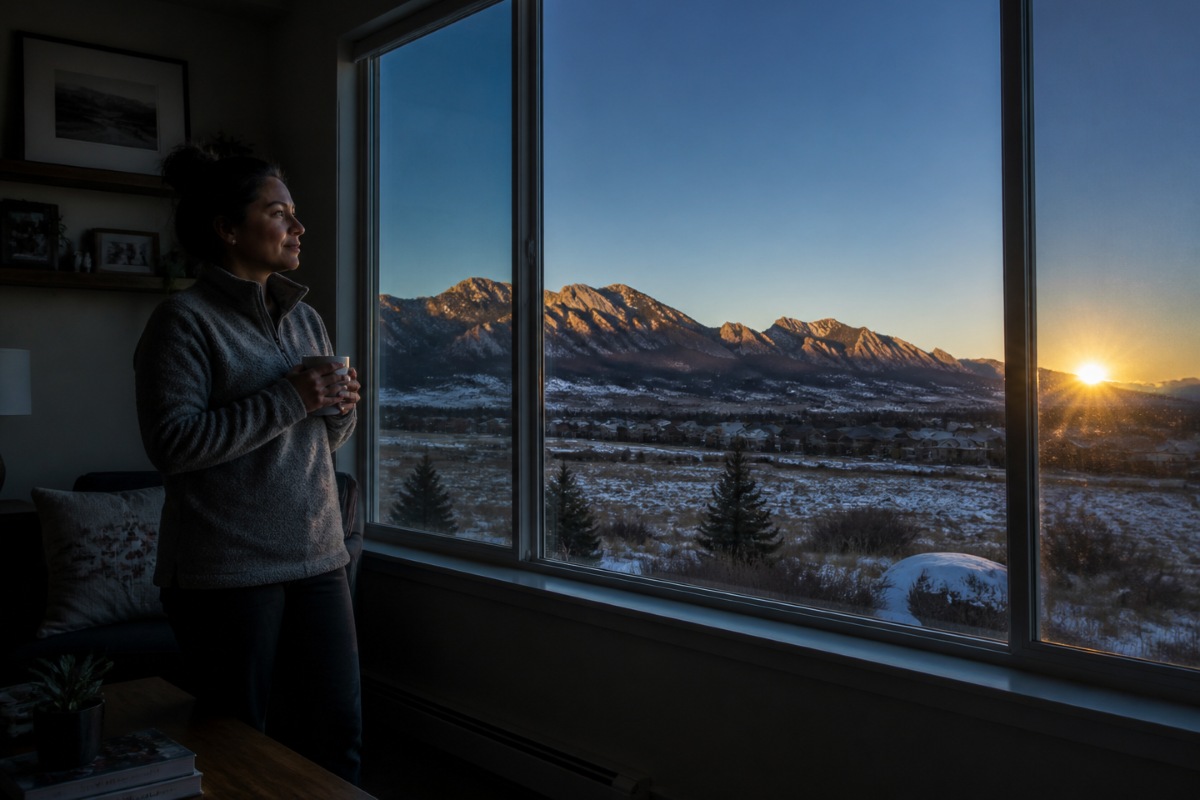
Colorado is one of the sunniest states in the country. Every fall, people here still notice the same slump: more sleep, less energy, more irritability, and a mood that sinks as the days get shorter. Many of them assume it cannot be seasonal depression, because seasonal depression is supposed to be a problem for cloudy places.
It is not. This post explains why sunshine does not protect against the winter pattern, what actually drives it, which Colorado conditions can make it harder, and how to tell a seasonal pattern from an ordinary rough winter.
The Colorado paradox
The “300 days of sunshine” line is a marketing number. Using 46 years of federal climate data, Denver averages closer to 252 days a year with sunshine, according to a Colorado Sun review of National Weather Service records. That is still a lot of sun. It is also beside the point.
Sunshine hours and daylight hours are two different things. Sunshine measures how often the sky is clear. Daylight measures how long the sun is above the horizon at all, and that is set by latitude and the calendar, not by the weather. Denver sits at about 40 degrees north, the same latitude band as Columbus, Ohio, and Philadelphia. Our days shorten by the same amount theirs do.
The size of that swing is larger than most people realize. On June 21, Denver gets about 15 hours and 2 minutes of daylight. On December 21, it gets about 9 hours and 24 minutes, according to published sunrise and sunset tables for Denver. That is a difference of roughly 5 hours and 38 minutes. By mid-December, someone who commutes in the dark and works indoors may see almost no direct daylight during the work week, no matter how clear the sky is.
What actually drives seasonal depression
Seasonal depression is not caused by cold or by cloudy skies. It is tied to the amount and timing of light reaching the eyes, and to the way the body responds. The National Institute of Mental Health (NIMH) describes three linked changes in people with the winter pattern.
Shorter days shift the internal clock, called the circadian rhythm, so the body’s sense of morning and night drifts later. The body produces more melatonin, the hormone that signals sleep, which adds to daytime sleepiness. And serotonin activity, which helps regulate mood, tends to drop when there is less light. NIMH also notes that low vitamin D may make these changes worse.
These changes do not happen to everyone. Some people are more sensitive to shifts in light than others, and that sensitivity tends to run in families. The result is that two people in the same office can have very different Decembers, and neither one is imagining it.
Put simply, less daylight changes brain chemistry in a predictable way for people who are sensitive to it. A bright, cold afternoon at 3:30 p.m. does not undo a dark commute at 7 a.m.
Colorado factors that make it worse
Daylight is the main driver. Several things about living here can add to it. None of these causes seasonal depression on its own. Each one can make a seasonal pattern harder to manage.
Altitude and sleep quality. Denver sits at 5,280 feet, and many people who work in the metro area live higher than that. At higher elevations, breathing during sleep becomes less steady and sleep is more fragmented, an effect documented in research on sleep at altitude. Most of the effect is seen well above Denver’s elevation, and the body adjusts over time, but for people in the foothills and mountain towns, lighter sleep can stack on top of the winter pattern.
Indoor winter work. Many Front Range jobs move fully indoors from November to March. Someone who spent summer lunches outside may go weeks without daylight on their face. Remote work, which is common along the Front Range, can make this worse, because for many people the walk to the car and the walk into the building are the only daylight in the day.
Cold snaps that end outdoor time early. Colorado’s fast weather swings can cancel the evening walk or the weekend hike for days at a stretch, which removes both light and movement.
Mountain-town isolation. Smaller towns, longer drives, and closed passes can shrink a person’s social world in winter, and social withdrawal is already one of the winter pattern’s main symptoms.
Seasonal depression versus a rough winter
Everyone has harder weeks in winter. The question is whether there is a pattern. Here is a quick comparison.
| Question | A rough winter | Seasonal depression |
|---|---|---|
| Timing | Starts after a specific event, or at random | Starts on roughly the same weeks each year as days shorten |
| Duration | Days to a few weeks | Months, typically four to five untreated |
| Lifts in spring? | Lifts when the situation changes, in any season | Lifts as daylight returns, usually March or April. However, with global warming, many people are staying indoors more often to stay cool and experiencing seasonal depression in the summer. |
| Returns yearly? | No clear pattern | Yes, often two or more winters in a row |
The full list of early signs, including the sleep, appetite, and energy changes that usually arrive before mood drops, is in Post 2 of this series: Is it seasonal depression or just winter?
When it happens every year
If the slump has come back two or more winters in a row, it is a pattern, not a bad month. Psychiatrists call this a recurrent seasonal pattern, and it matters for two reasons.
First, it is one of the most predictable forms of depression, which means treatment can be planned before the hardest weeks instead of after. A person who knows that mid-January is usually the low point can have a plan in place by November. Second, it is treatable. Light therapy, therapy built for the seasonal pattern, and medication started in early fall help many people. When those have already been tried and the pattern still returns, there are further options, including in-clinic treatments for depression that has not responded to medication.
What we ask people not to do is wait it out a third time on the assumption that a sunny state should be enough. Daylight, not sunshine, is what the body is responding to, and daylight in Colorado is in short supply from November through February.
Post 4 in this series explains the full range of options in plain language: When seasonal depression keeps coming back. Post 3 offers a practical winter home checklist for the weeks before the days get short.
Where to get help in the Denver area
Axis Integrated Mental Health is a locally owned psychiatry practice with four clinics along the Front Range and telehealth across Colorado. Our psychiatric providers evaluate and treat seasonal affective disorder alongside other forms of depression, so a seasonal pattern that sits on top of something else does not get missed.
- Aurora: serving Aurora, east Denver, and the Anschutz area.
- Denver Tech Center: serving Greenwood Village, Centennial, Englewood, and southeast Denver.
- Boulder / Louisville: serving Louisville, Boulder, Lafayette, Superior, Broomfield, and the foothills.
- Westminster: serving Westminster, Arvada, Thornton, Northglenn, and the northwest metro.
- Telehealth: statewide, including mountain communities.
Intake appointments are covered by most insurance, and no referral is needed to book.
Not sure where to start? Call one of our four Colorado clinics or start with telehealth.
- Aurora: (720) 400-7025
- Denver Tech Center: (720) 400-7025
- Boulder / Louisville: (720) 400-7025
- Westminster: (720) 400-7025
If you are having thoughts of suicide or of not wanting to be here, call or text 988 to reach the 988 Suicide and Crisis Lifeline. It is free, confidential, and open 24 hours a day. If you are in immediate danger, call 911.